Organic Buckwheat Pillow: What the Word "Organic" Actually Promises
People searching "organic buckwheat pillow" are usually trying to avoid synthetic fill and, often, trying to avoid chemically processed materials near their face for eight hours a night. That is a reasonable thing to want, and it is worth separating the two ideas the word "organic" bundles together. One is how a crop was grown, audited upstream and certified as USDA Organic or GOTS. The other is what the finished product actually contains, tested in a laboratory. HuskRest holds the second: the cover carries OEKO-TEX Standard 100 certification, and the fill is buckwheat husk with nothing blended into it.
What "organic" would actually require
| Claim | What it actually means | Does HuskRest hold this? |
|---|---|---|
| "Natural fill" | Plant-derived material (e.g. buckwheat hulls) rather than synthetic fiberfill | Yes, hulls are a natural buckwheat byproduct |
| "Organic" (marketing term, uncertified) | Informal, unverified description often used loosely in listings | Not used as a formal claim on our listings |
| OEKO-TEX Standard 100 | Finished textile lab-tested against a list of substances harmful to health | Yes, the cover is certified |
| USDA Organic / GOTS certified | Verified growing and processing method for the crop or textile, audited upstream | A different standard, covering the farm rather than the finished fabric |
If a formal certificate matters to your purchase, look for the certification mark and the issuing body on any listing you compare, ours included.
What we do know about the hull fill itself
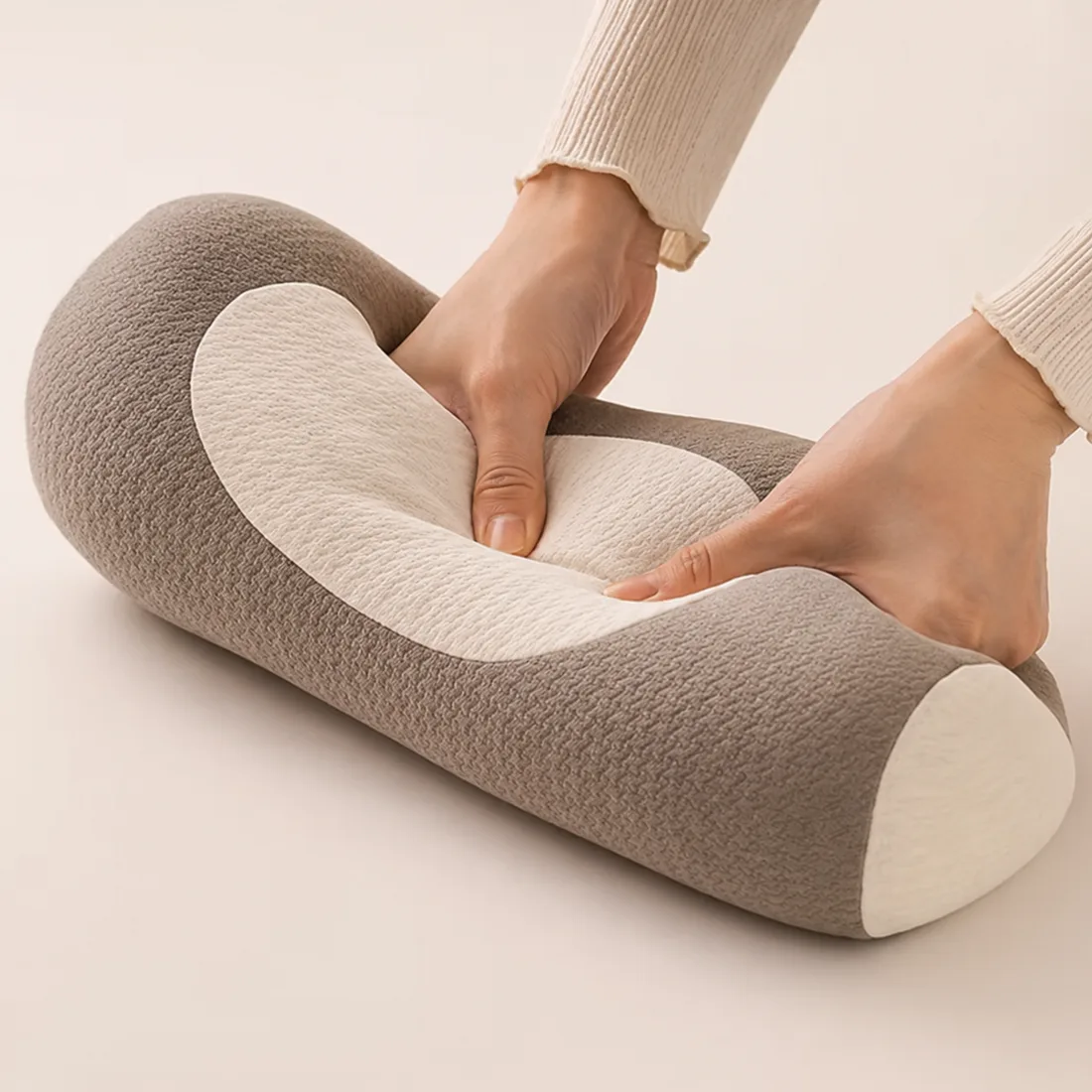
The buckwheat hulls in HuskRest's pillow are the outer shell removed during milling, a byproduct of processing buckwheat groats, not a synthetic or chemically manufactured fiber. That much is a straightforward fact about the fill category, not a certification. Blended into that fill is a portion of memory foam, inside a 100 TC polyester-cotton cover (density 20). The finished pillow is 45 x 20 cm, in a cylindrical, contoured shape, and is available in two colorways (Cream and Taupe).
The fill is the husk itself, cleaned and dried, with no softeners, dyes or fragrances blended in. The cover it sits in is the part that touches your skin, and that is the part carrying OEKO-TEX Standard 100 certification, tested against substances known to be harmful to health.
Sourced stats on the fill and sleep
thread-count density rating of the HuskRest pillow cover fabric
— HuskRest product specification, 2026
Verified reviews: 83 reviews.
— HuskRest verified order data, 2026
Roughly the proportion of US adults who don't routinely get enough sleep, which is part of why fill material, natural or not, is worth choosing deliberately
Our read on the fill and the fabric
We describe this pillow by what the fill is, not by a label it does not carry: a natural, minimally processed plant byproduct, not synthetic fiberfill. Verified reviews: 83 reviews, 4.7 / 5.
How to actually verify an "organic" pillow claim
This applies to every brand in the category, not just HuskRest. A quick way to sanity-check a listing: search the certifying body's public database for the seller or product name. If nothing comes up, treat "organic" as a descriptive word rather than a verified standard, and decide whether that is good enough for your needs. We display a certification badge only when the certificate exists for this exact product.
| Certification | Covers | Who verifies it |
|---|---|---|
| USDA Organic | Raw agricultural crop (e.g. the buckwheat itself) | USDA-accredited certifying agents |
| GOTS | Finished textile, from fiber to fabric processing | Independent GOTS-approved certification bodies |
| OEKO-TEX Standard 100 | Absence of harmful substances in the finished textile | OEKO-TEX member institutes |
A note on sensitivities
Buckwheat hulls are a plant material, and like any plant-derived product, a small number of people can be sensitive to grain dust or plant allergens in general. We have not run or commissioned allergen testing on this specific fill, so we are not going to claim it is hypoallergenic or allergen-free, because we cannot back that up with actual test data. If you have a known grain or plant sensitivity, that is worth factoring into your decision independently of the "organic" question, and worth a quick conversation with a doctor or allergist if you are unsure, rather than relying on a product page either way.
If natural fill matters more than certification
If your priority is genuinely "not synthetic fiberfill" rather than a certified label specifically, buckwheat hulls satisfy that on their own, see our buckwheat hull pillow page for how the material behaves day to day. If you're curious where hull-fill pillows originated, our Japanese buckwheat pillow page covers the sobagara tradition. And if you're comparing this to foam or latex cervical pillows more broadly, see our cervical pillow guide.
free shipping to 4 countries · 30-day money-back guarantee

Elena Marsh · Sleep Product Reviewer, 5 yrs testing pillows and sleep accessories
Elena has spent five years testing pillows, mattress toppers, and sleep accessories, and is careful to distinguish marketing language like 'natural' or 'organic' from actual third-party certification.
Reviewed by Elena Marsh. See how we test and about HuskRest.
Organic buckwheat pillow FAQ
Is the HuskRest pillow tested for harmful substances?
Yes. The cover fabric is certified to OEKO-TEX Standard 100, the international testing programme for textiles, which screens the finished material against a list of substances known to be harmful to health. That is the assurance most people are actually after when they search for an "organic" pillow: what ends up against your skin has been tested.
What does "organic buckwheat pillow" usually mean in listings?
In most pillow listings, "organic" is used loosely to mean the hull filling is a natural plant byproduct rather than a synthetic material like polyester fiberfill. A small number of brands hold an actual third-party organic certification on the buckwheat crop or the cover fabric, that is a stricter, verifiable claim, and shoppers should check for an actual certification mark if that distinction matters to them.
Are buckwheat hulls chemically treated?
HuskRest's hull fill is the plain outer husk left over from milling buckwheat for food, used as it comes off the mill. No softeners, dyes or fragrances are blended into it, and nothing is added to the fill beyond the hulls and the memory foam layer. The cover that holds it, the part in contact with your skin, is certified to OEKO-TEX Standard 100 and tested against substances known to be harmful to health.
Is a natural fill like buckwheat better than synthetic fiberfill?
It depends on what you are optimizing for. Buckwheat hulls offer airflow and hand-adjustable shaping that synthetic fiberfill does not. Fiberfill is typically softer, quieter, and lower-maintenance. Neither is inherently "better", they are different materials suited to different preferences. What does carry across both is the cover: on the HuskRest pillow it is certified to OEKO-TEX Standard 100.
Related reading: buckwheat pillow overview · cervical pillow · buckwheat hull pillow · Japanese buckwheat pillow · buckwheat pillow benefits · reviews