
Japanese Buckwheat Pillow: The Sobagara Tradition Explained
If you searched this term, you are likely curious about where the buckwheat-hull-pillow idea comes from, not just shopping for any pillow. This page separates the two things clearly: the genuine tradition behind sobagara makura, and where a modern product like HuskRest's actually sits relative to it, without dressing up a contemporary DTC pillow as an heirloom import.
What sobagara makura actually is
Buckwheat has a long history as a staple crop in Japan, most visibly in soba noodles, and hulls left over from that processing were historically repurposed rather than discarded, used to fill pillows for their airflow and their ability to be packed into a firm, supportive shape. That practical, waste-reducing origin is part of why the hull-fill approach carries a "Japanese pillow" association in many product listings today, even outside Japan.
That association describes the origin of the fill concept, not a guarantee that every buckwheat hull pillow sold today, including HuskRest's, is manufactured in Japan or follows traditional craftsmanship. We would rather say that outright than let the keyword imply something about our product that is not true.
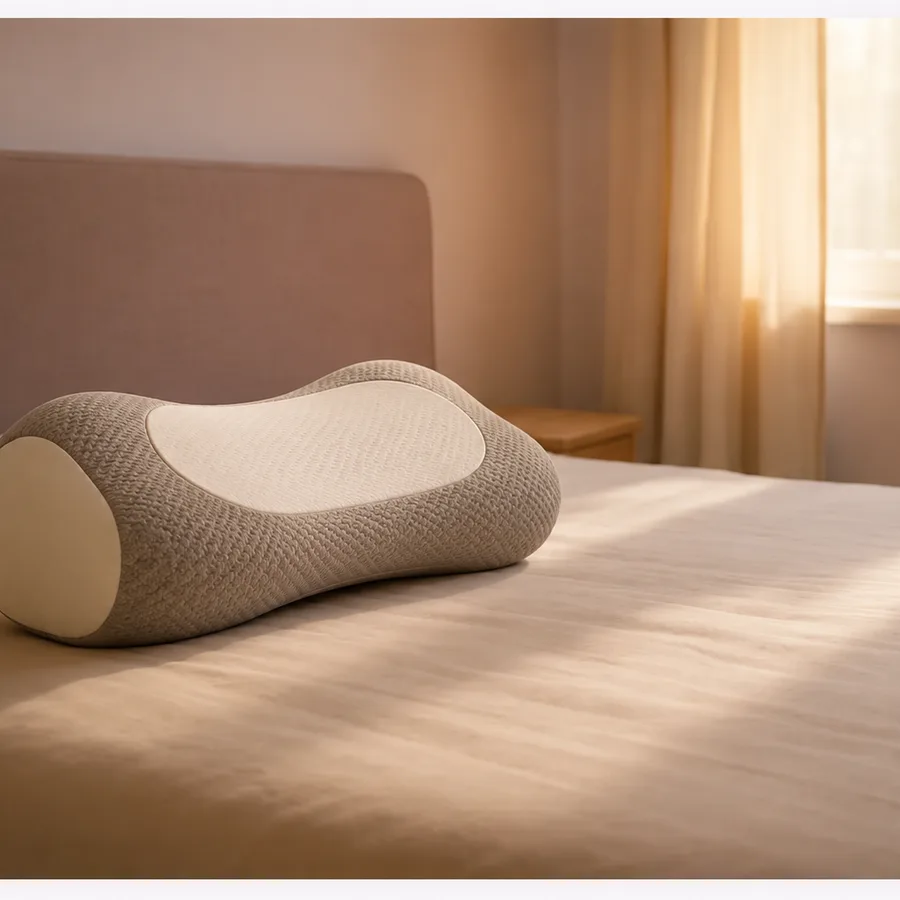
Where HuskRest's pillow differs from the traditional style
| Aspect | Traditional sobagara makura | HuskRest buckwheat pillow |
|---|---|---|
| Shape | Typically flat or rectangular | Cylindrical, contoured ("bone" shape) for neck alignment |
| Fill | 100% buckwheat hulls | Buckwheat hulls blended with memory foam fill |
| Cover | Varies by maker, often simple cotton | 100 TC polyester-cotton blend, density 20 |
| Marketing origin | Rooted in Japanese household tradition | Modern DTC product; not marketed as Japanese-made |
The shared thread is the fill material itself and the reasons people like it: airflow and a shape you can adjust by hand. The contoured cylinder shape, the foam blend, and the four available colorways are HuskRest's own design choices, built for cervical support rather than to replicate a traditional flat sobagara pillow.
Sourced stats on buckwheat and sleep material
finished pillow dimensions, cylindrical contoured shape
— HuskRest product specification, 2026
polyester-cotton cover density (thread count) used on the pillow case
— HuskRest product specification, 2026
the general nightly sleep window most adult sleep guidance points to, part of why fill quality in a pillow used every one of those hours is worth getting right
— CDC, Sleep and Sleep Disorders guidance, 2024
Our read on the "Japanese" association
HuskRest does not present this pillow as a traditional Japanese import, hand-crafted sobagara, or anything sourced from a Japanese workshop, because it isn't. What we sell is a contoured, cylindrical buckwheat-and-foam cervical pillow that uses the same fill tradition popularized in Japan, built for a different, more structured shape. Verified reviews: 83 reviews, 4.7 / 5.
How the traditional style is used versus a contoured design
With a flat, traditional hull pillow, most of the shaping happens through use, the head presses a hollow into the hulls over time, and the sleeper adjusts fill by hand as needed. A contoured design starts from a built-in shape (in HuskRest's case, a cylindrical, "bone"-like curve) so the neck support zone is already defined before you ever touch it, though you can still redistribute hulls inside that shape to fine-tune firmness. Neither approach is more "authentic" than the other, flat hull pillows remain common and well-regarded, and contoured shapes are simply a different engineering choice aimed specifically at cervical alignment rather than general head support.
If you have used or seen a traditional flat sobagara pillow before and are now considering a contoured buckwheat pillow, expect the biggest adjustment to be positional: a contoured pillow generally wants your neck centered in the curve, whereas a flat hull pillow is more forgiving of where you rest your head. Buyers switching between the two styles often need a few nights to find the right position, which is consistent with the general adjustment period reported for shaped cervical pillows.
Buckwheat hull pillows outside Japan
Japan is the origin most commonly cited for hull-filled pillows, but it isn't the only one. Buckwheat hull pillows also have a long history in Korea, where similar loose-fill designs have been used for generations, and the crop itself is grown widely enough across East Asia that hull-repurposing as bedding fill shows up in more than one regional tradition rather than a single country's invention. That matters for accuracy: when a modern DTC pillow like HuskRest's gets marketed with a "Japanese buckwheat pillow" keyword, it's leaning on the most search-recognized version of a broader regional practice, not claiming a single, exclusive lineage.
What ties these traditions together isn't geography so much as the material itself: buckwheat hulls were a low-cost, available byproduct of a food crop already being processed, and repurposing them as pillow fill made practical sense wherever buckwheat was grown and milled at scale. The "Japanese" framing persists today mainly because sobagara makura is the most documented and most frequently referenced version of this practice in English-language product listings and search behavior, not because the underlying idea was unique to one place.
What to check if the origin story matters to your purchase
If you specifically want a pillow actually made in Japan using traditional methods, rather than one that simply uses the same fill category, look for explicit manufacturing-location claims and, ideally, a named workshop or maker, not just the word "Japanese" in a title or keyword. A listing that mentions the term without any sourcing or manufacturing detail is very likely using it descriptively, the way HuskRest does here, to signal fill heritage rather than country of manufacture. We'd rather you know that distinction going in than have you assume more than the listing actually promises.
If you're comparing hull fill more broadly
If your interest is really in the hull material and how it behaves, noise, smell when new, firmness versus foam, our buckwheat hull pillow page covers that in depth. If you're weighing this against foam or latex cervical pillows generally, see our cervical pillow comparison. And if the "is this fill treated with anything" question matters to you, we address it plainly on our organic buckwheat pillow page.
free shipping to 4 countries · 30-day money-back guarantee

Elena Marsh · Sleep Product Reviewer, 5 yrs testing pillows and sleep accessories
Elena has spent five years testing pillows, mattress toppers, and sleep accessories for comfort, materials, and honest longevity, including researching the traditional origins of hull-fill designs.
Reviewed by Elena Marsh. See how we test and about HuskRest.
Japanese buckwheat pillow FAQ
What is a Japanese buckwheat pillow?
Often called sobagara makura in Japanese, it is a pillow traditionally filled with buckwheat hulls (soba-gara), the shells left over from processing buckwheat groats. The tradition values the hulls for their airflow and moldable feel, and this style of pillow has been used in Japan for generations.
Is HuskRest a traditional Japanese buckwheat pillow?
No. HuskRest makes a modern, cylindrical, contoured buckwheat pillow designed for neck and shoulder support, blending hulled buckwheat with memory foam. It shares the core fill material with traditional sobagara makura but is not marketed or sourced as a traditional Japanese product, we want to be clear about that rather than borrow a heritage claim we cannot back up.
Why is buckwheat hull filling associated with Japan?
Buckwheat has been cultivated and eaten in Japan for centuries, especially as soba noodles, which left behind hulls as a byproduct. Using that byproduct as pillow fill became a long-standing household practice, which is why the fill and the "Japanese pillow" association are often mentioned together in product listings today.
Do all buckwheat hull pillows come from Japan?
No. Buckwheat hull pillows are made and sold globally today, including by DTC brands in the US and Europe. The hull-fill concept has Japanese roots, but the pillows on the market now are produced and shipped from many different countries, HuskRest included.
Related reading: buckwheat pillow overview · cervical pillow · buckwheat hull pillow · organic buckwheat pillow · buckwheat neck pillow · reviews