
Buckwheat Hull Pillow: What's Actually Inside It
If you searched "buckwheat hull pillow" specifically, you are probably past the "what is this product category" stage and want to know about the material itself: what a hull is, how it behaves night to night, and what to expect when you first open one. This page covers that directly, plus exactly how HuskRest's pillow is filled.
What a buckwheat hull actually is
Because hulls are hollow rather than solid, a pile of them holds a surprising amount of empty space between the individual pieces. That gap is where the pillow's two defining traits come from: air can pass freely through the fill (so heat does not build up the way it can in a dense foam block), and the hulls can be redistributed by hand, letting you build a firmer ridge in one area and a softer zone in another. This is different from foam, which is manufactured into one shape and does not get pushed around after the fact, and different from down or fiber fill, which compresses flat over time rather than holding volume.
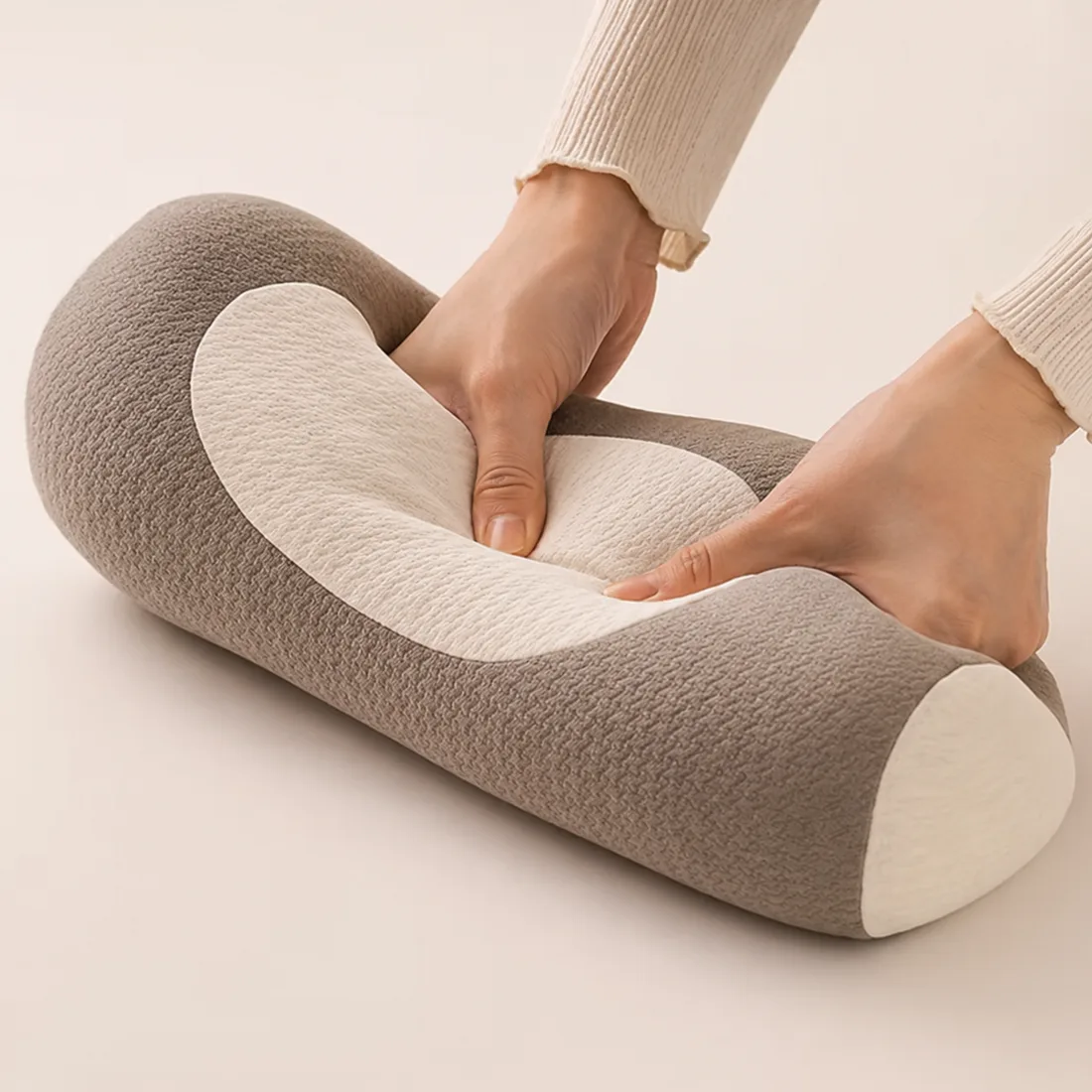
HuskRest's pillow blends hulled buckwheat with a portion of memory foam fill, inside a cylindrical, contoured shape designed for neck and shoulder alignment. The cover is a 100 TC polyester-cotton blend (density 20), and the finished pillow measures 45 x 20 cm, available in two colorways (Cream and Taupe).
What to expect the first time you use one
| Sensation | What's happening | Normal? |
|---|---|---|
| Rustling sound when you move | Hulls shifting against each other | Yes, fades in perception over the first nights |
| Firmer feel than foam | Hulls don't compress like foam does | Yes, by design |
| Mild grain-like smell | Natural hull odor, common on new loose-fill pillows | Yes, usually fades; wash the cover if it lingers |
| Pillow feels lumpy in spots | Hulls unevenly distributed from shipping | Yes, redistribute by hand before first use |
These are the characteristics anyone researching hull-filled pillows asks about, so they are listed here upfront. None of them are specific to HuskRest: they come with the hull material itself.
Sourced stats on the material and sleep
thread-count density rating of the HuskRest pillow cover fabric
— HuskRest product specification, 2026
finished pillow dimensions, cylindrical contoured shape
— HuskRest product specification, 2026
US adults report not getting enough sleep on a regular basis
Our read on the hull fill in this pillow
Verified reviews: 83 reviews, 4.7 / 5. See our reviews page.
How hull fill compares to what else is on the market
| Fill type | Adjustable by hand | Airflow | What that means in use |
|---|---|---|---|
| Buckwheat hulls | Yes | High | Holds its height all night; add or remove fill to set it |
| Memory foam | No | Low | Retains heat, fixed shape |
| Latex | No | Medium | Firm, can feel heavy |
| Down / fiber | Limited | Medium | Compresses flat over months |
| Water-based | Yes (via fill valve) | Low | Can feel unstable to some sleepers |
Buckwheat hulls are not the only pillow fill built around airflow and adjustability, memory foam, latex, and water-based cervical pillows exist for the same broad goal of neck support, using different mechanics. If you are weighing the category more broadly rather than the hull material specifically, our cervical pillow comparison covers how buckwheat stacks up against foam and latex designs. If you are curious about the traditional roots of this fill, see our page on the Japanese buckwheat pillow (sobakawa), and if the "is this fill treated with anything" question matters to you, we address it honestly on our organic buckwheat pillow page.
Caring for a buckwheat hull pillow
Basic care is simple but different from a standard foam pillow: unzip the cover, wash it separately per the care label, and let it dry completely before putting it back over the hull insert. Airing the hull fill itself in a dry, ventilated spot for a few hours helps with the initial grain-like smell some new hull pillows carry out of the packaging. Because hulls are a natural material, avoid soaking or machine-washing them directly, that is where the zipper and cover, not the hulls, should do the work of staying clean.
free shipping to 4 countries · 30-day money-back guarantee

Elena Marsh · Sleep Product Reviewer, 5 yrs testing pillows and sleep accessories
Elena has spent five years testing pillows, mattress toppers, and sleep accessories for comfort, materials, and honest longevity, with particular focus on natural and loose-fill materials like buckwheat hulls.
Reviewed by Elena Marsh. See how we test and about HuskRest.
Buckwheat hull pillow FAQ
What are buckwheat hulls?
Buckwheat hulls are the hard outer shell removed from buckwheat groats during milling. They are lightweight, roughly triangular, and hollow, which is what gives a buckwheat hull pillow its airflow and its ability to be shaped by hand, unlike a solid foam fill.
Why do buckwheat hull pillows make noise?
The hulls shift and rub against each other slightly whenever you move your head, producing a faint rustling sound. This is normal for any loose-fill hull pillow and is not a sign of a defect — it is the same movement that lets you reshape the pillow under your neck. Most sleepers stop registering it within the first few nights, and the 30-day window is there precisely so you can find out on your own pillow.
Do buckwheat hull pillows smell when new?
A mild, grain-like smell from the hulls is common on new loose-fill pillows and typically fades within the first week or two of use and airing out. If it lingers, remove and wash the outer cover.
How is a buckwheat hull pillow different from a buckwheat husk pillow?
"Hull" and "husk" refer to the same outer shell of the buckwheat seed and are often used interchangeably in pillow listings. There is no material difference, both describe the same lightweight, hollow triangular fill.
Related reading: buckwheat pillow overview · cervical pillow · Japanese buckwheat pillow · organic buckwheat pillow · buckwheat pillow benefits · reviews